워싱턴-북한의 과감한 통화 재지명화는 자국 내에서 성장하는 상인층의 구성원을 대상으로 하는데, 이들 중 상당수는 암시장 활동을 통해 돈을 번 것으로 분석된다.
북한은 월요일 신화통화를 발행해 원화에서 2제로를 떨어뜨렸다고 한국 언론이 보도했으며, 북한 중앙은행은 신화와 환전할 수 있는 구화 금액에 엄격한 제한을 두었다.
기존의 금리에서는 미국 달러가 북한 135원과 같았다.
신통화 이슈는 관영 한국중앙통신이 공식 발표하지 않았다.
이 같은 움직임은 시민들이 보다 안정적인 미국 달러와 중국 위안화로 원화를 교환하기 위해 암시장 환전업자들에게 달려드는 보도가 나오면서 북한을 충격으로 몰아넣었다.
북한 시민들은 신통화 규정을 어긴다는 이유로 무자비한 처벌을 받을 수 있다는 위협을 받았고, 일요일까지 1인당 최대 10만 원(공식금리로는 690달러이지만 암시장 금리에 따르면 40달러 미만)의 구통화를 새 지폐로 교환할 수 있다고 말했다.
하지만 서울의 NGO들은 이제 광범위한 분노에 대응해 그 한도를 현금 15만원, 은행권 50만원으로 올렸다고 보고하고 있다.
시장 친화적이지 않습니다.
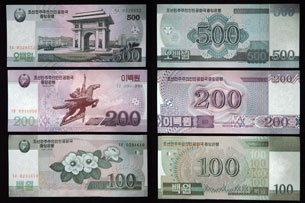
일본 내 종북 신문인 조선신보가 공개한 이미지는 2009년 12월 4일 새로 발행된 북한 500원·200원·100원 지폐의 앞뒤를 보여준다.
뉴욕에 본사를 둔 유라시아그룹의 아시아분석가 겸 리서치 매니저인 에이브러햄 킴은 평양이 1990년대부터 시장 개혁을 점진적으로 뒤집으려 했기 때문에 이번 재지명도 놀라운 일이 아니라고 말했다.
김 대표는 워싱턴 소재 사무실에서 "새로운 상인층이 등장하고 있다. 시장은 번성했지만 부패가 만연했고 정부는 이러한 시장의 활동을 통제하는 데 어려움을 겪었다"고 말했다.
"그래서 이번 개정... 지난 몇 년 동안 발생해 온 축적된 부의 상당 부분을 뿌리 뽑는 방법"이라고 말했다.
"중앙 정부가 이러한 불법적인 암시장 활동으로 이익을 취하고 생계를 위해 국가 이외의 다른 곳에서 찾고 있는 모든 사람들이 그 비용을 지불하도록 보장하는 것은 확실한 방법"이다.
스콧 스나이더 워싱턴 아시아재단 한미정책센터 소장은 이번 재지정이 시장활동에 종사하는 사람들에게 '빈곤화 효과'를 줄 것이며 원화 표시나 정부의 통제권 밖의 모든 경제활동에 부정적인 영향을 미칠 것으로 기대한다고 말했다.
스나이더는 "정부가 화폐의 가치와 상품과의 관계 측면에서 어떤 이유로든 어려움에 직면했을 때 취하는 행동 유형"이라고 말했다.
그는 "시장 친화적인 움직임은 분명 아니다. 거래 비용을 높이고 대부분의 사람들의 삶을 더 어렵게 만들 것"이라고 말했다.
인플레이션 억제?
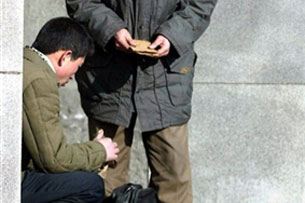
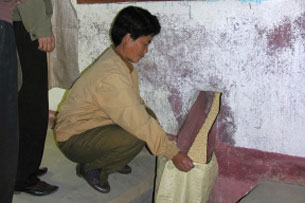
북한 남성 2명이 평양의 지하철역 밖에서 미국 달러를 사고파는 암시장 거래를 한다.
AFP
워싱턴의 피터슨 국제경제연구소의 제니퍼 리 연구분석관은 이번 재지정의 일반적인 취지를 인플레이션에 대한 빠른 해결방안이자 정부가 "장롱에 숨겨둔 돈을 꺼내서 유통을 늘리려는 시도"라고 설명했다.
그러나 북한의 '고유의 상황'과 각 가계가 구형 통화어음을 새 돈으로 교환할 수 있는 금액에 대한 엄격한 제한을 감안할 때 "주로 국가 통제를 넘어 기업가적 시장 활동을 축소하려는 정부의 대전략의 일부로 인식한다"고 덧붙였다.
이 대표는 "이번 재평가는 주로 시장 활동에 종사하는 국민을 대상으로 하고, 최근 정부가 국가에 더 의존하게 만들기 위해 시장을 단속하려는 노력이 전개되면서 사건은 목적에 부합하는 것으로 보인다"고 말했다.
RFA 해설위원으로 활동하는 서울 소재 북한 전문가 안드레이 란코프는 통화개혁의 주요 목표는 '비공식' 현금예금을 싹쓸이해 물가상승을 억제하는 것이라고 말했다.
그러나 그는 재지명에는 정치적, 심리적 성격의 추가적인 목표가 있다고 덧붙였다.
란코프는 "1980년대 후반에 있었던 가격과 임금의 규모를 대충 복원한다. 이제 월평균 임금은 약 40~50원 정도가 될 것이다. 1985년엔 70~80원이었다. 쌀 1킬로당 25원 정도가 들 것이고, 1985년엔 암시장 가격이 약 20원 정도가 될 것"이라고 말했다.
이는 "김일성 시대 체제를 본질적으로 되살려서 상황을 '정상화'하려는 정부의 선언된 의도에 잘 부합한다"고 말했다.
사회 계층에 대한 영향
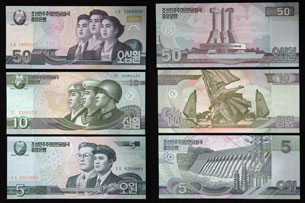
일본 내 종북 신문인 조선신보가 공개한 이미지는 2009년 12월 4일 새로 발행된 북한 5원·10원·50원 지폐의 앞뒤를 보여준다.
스나이더는 이번 조치의 영향에서 정치 엘리트층이 보호받을 것이지만 겨울철로 악화되는 식량 부족을 예상해 현금을 축적한 다른 북한 주민들은 "상품을 들고 서빙받는 것이 더 좋았을 것이라는 것을 알게 될 것"이라고 말했다.
김 대표는 정치 엘리트의 보유가 환율의 영향을 받지 않을 것이라고 입을 모았다.
김 대표는 "상인이 된 서민에게는 새 화폐로 얼마를 환전할 수 있는지에 일정한 한계가 있기 때문에 영향이 상당히 클 것 같다"고 말했다.
그는 "하지만 엘리트에게는 아마도 덜 그럴 것이다. 그들의 재산의 대부분은 외화를 기반으로 할 것 같다"고 말했다.
김 위원장은 그러나 북한 엘리트 모두가 재평가에서 손을 떼지 않을 것이며 평양의 즉각적인 영향권 밖의 영역에서 실행을 늦추려는 시도를 할 가능성이 크다고 덧붙였다.
김 대표는 "지역이 많은 지역에서도 특히 중국을 건너 들어오는 상품에서 깎아주기 때문에 지역 당 지도자와 지역 정치인들도 이러한 시장에서 혜택을 받다. 그래서 제품이 들어올 때 모든 사람이 불법적으로 혜택을 받는다"고 말했다.
그는 "평양에서 '이런 것들을 단속해야 한다'는 명령이 나오더라도 이 지역 사람들은 그것에 입술을 대하겠지만, 이로부터 이익을 얻고 있기 때문에 실제로 이를 이행하기는 매우 어렵다"고 말했다.
안정적인 통화를 추구합니다
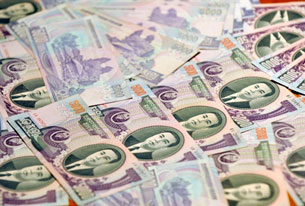
2009년 2월 2일 서울 통일부 기자회견에서 북한 지폐가 테이블에 진열되고 있다.
AFP
이 대표는 재명령이 지역 화폐로 얼마나 많은 부를 보유하느냐에 따라 계층별로 다른 방식으로 영향을 미칠 것이라고 말했다.
"중국과 거래하는 엘리트와 상인들은 대부분 외화로 부를 보유하기 때문에 걱정할 일이 덜할 것"이라고 말했다.
대신 시장 활동에 의존하는 북한의 중·하위 계층이 부정적인 영향의 최대 부담을 지게 될 것이라고 이 대표는 말했다.
이 대표는 "첫째, 옷장에 숨겨져 있는 [교환 허용 한도]를 넘는 여분의 현금을 보유할 가능성이 가장 높은 사람들이다"고 말했다.
"이번 시장활동에 대한 간접단속으로 소외돼 애초 정부의 공적분배시스템에서 충분한 식량을 구하지 못했던 이 국민들이 더 힘들어질 것"이라며 "식량사정이 심각하고 겨울이 다가오는 상황에서 엄청난 고통을 겪게 될 것"이라고 말했다.
그러나 란코프는 북한에서 "현지 화폐에 돈을 보관할 정도로 어리석었던" 사람은 거의 없다고 지적했다.
란코프는 "인플레이션과 또 다른 통화 개혁에 대한 두려움이 항상 존재하기 때문에 개혁은 15-20년에 한 번씩 일어나며, 그들은 저축을 미국 달러, 일본 엔화, 그리고 무엇보다도 좋은 오래된 중국 위안화로 유지한다"고 말했다.
그는 "진짜 피해를 볼 사람들은 자본의 상당 부분을 북한 화폐로 보관해야 하는 소매업자들이다. 특히 곡물, 채소, 소규모 생필품 판매자들에게는 그렇다. 일부 소규모 사업자들은 사실상 모든 것을 잃을 수 있다"고 말했다.
물물교환 경제
2005년 10월 17일자 WFP 유인 사진에는 황해 북부 소흥현의 한 공공 유통 센터에서 옥수수를 받기 위해 줄을 서 있는 북한 여성들이 담겨 있다.
AFP
규제되지 않는 시장 활동을 억제하려는 정부의 노력에도 불구하고 원화 안정성에 대한 신뢰가 상실되면 북한 주민들이 정권에서 공급하는 부족한 주식을 보충하기 위해 갈고 치기로 눈을 돌릴 수 있다는 분석이 나왔다.
스나이더는 물물교환을 통해 이루어지는 시장활동 비중이 증가하면 재지명 영향이 줄어들 것이라고 말했다.
스나이더는 "통화가 있든 없든 여전히 교환이 있을 것이다. 그래서 사람들은 자신이 가지고 있는 것, 생산할 수 있는 것을 가져가야 하고, 그것을 그들이 필요로 하는 상품으로 교환하려고 할 것"이라고 말했다.
그는 "생산자들에게는 교환의 매체가 아마도 이동할 것"이라고 말했다.
김 대표는 이처럼 급격한 통화 전환에 물물교환이 자연스러운 대응이겠지만, 북한 주민 대부분은 서로 물물교환할 실질적 가치가 부족하다고 말했다.
그는 "문제는 무엇으로 물물교환을 하는 것인가? 물물교환할 것이 있어야 한다. 물물교환은 실제로 거래할 가치가 있는 것을 가진 사람들과 함께 경제가 번창할 때 가능하지만 여기에는 아무것도 없는 사람들이 있다"고 말했다.
불안 가능성
북한 주민들이 겪을 수 있는 어려움에도 불구하고 환율 환전에 따른 정치적 불안은 거의 없을 것이라는 분석에 동의했다.
란코프는 이 같은 명칭 변경의 부정적 영향이 오래가지 않을 것이라고 말했다.
그는 "식량 상황과 관련해 어떤 차질도 나쁘지만 정말 극적인 것은 기대하지 않는다. 많은 쌀 판매자가 적어도 일시적으로 사업을 중단하지만, 기껏해야 몇 달 안에 모든 것이 정상으로 돌아갈 것"이라고 말했다.
김 위원장은 통화 개혁이 '불안의 산발적 급증'을 가져올 수 있다고 말하면서도 북한 주민들이 대규모 시위를 시작할 가능성은 낮다고 입을 모았다.
김씨는 "그들을 동원할 게 없다, 대중을 이끌게 할 게 없다"고 말했다.
그는 "김정일은 자신의 엘리트들을 자신에게 충성시키려 노력하고, 자신에게 반대해온 사람들을 억압하는 놀라운 일을 해왔기 때문에 이것이 대중의 정치적 불안정으로 이어지는 것을 보지 않는다"고 북한의 현 지도자를 언급했다.
탈북이 더 많아졌다고요?
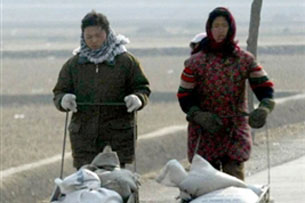
북한 여성 2명이 농산물을 들고 평양으로 가는 길목에서 트롤리를 밀고 가다 2003. 2. 13. AFP.
AFP
김 부장은 규제되지 않은 시장이 전통적으로 '정부 배급제가 실패한 틈을 메우는 완충기' 역할을 해왔다고 덧붙였다.
그러나 북한 주민들이 더 이상 이들 매장의 제품으로 자신들의 수요를 보충할 수 없다면 이는 절망감에 따른 탈북 증가로 이어질 수 있다고 말했다.
김 대표는 "이들 시장에 의존해 온 하위권 사람들은 어디서 물건을 구하겠느냐"며 "이제 사람들은 다시 기아하거나 중국에서 무언가를 찾아가는 결정에 직면했다"고 말했다.
그는 "불안이 있고, 폭력 사태 등이 아닌 인도주의적 영역의 측면에서도 더 많다"고 말했다.
스나이더는 국민적 항의가 일어나기보다는 "당신이 갖게 될 것은 이 조치와 연관될 가능성이 있는 개별적으로 믿을 수 없을 정도로 비극적인 이야기의 집합"이라고 말했다.
그는 "이번 조치가 매우 명확하게 중앙에 의해 주도되기 때문에, 그것은 아마도 어떤 종류의 분노와 집단 행동과 대응보다 더 가능성이 있다고 생각한다"고 말했다.
김 대표는 북한 정권이 그 자금이 다른 생산적인 목적에 사용될 수 있었을 때 새로운 화폐를 인쇄하는 데 귀중한 자원을 낭비하고 있다고 말했다.
그는 "그러나 제어가 정권의 생존력을 보장하는 것을 주요 목표로 하는 국가라면 놀라운 일이 아니다"라고 말했다.
이는 다시 한 번 "사람들이 점점 더 정권에 대한 애호도가 떨어지는 사회의 또 다른 침식"이다.
조슈아 리페스의 원본 리포팅. 댄 사우더랜드 편집.
Copyright © 1998-2023, RFA. Used with the permission of Radio Free Asia, 2025 M St. NW, Suite 300, Washington DC 20036.
Currency Hike Targets Markets
WASHINGTON—North Korea’s drastic currency redenomination targets members of the country’s growing merchant class, many of whom have made their money through black market activities, according to analysts.
North Korea issued new currency Monday, dropping two zeroes off the won, according to South Korean news reports. The North Korean central bank put strict limits on the amount of old money that can be exchanged for the new won.
At the old rate, U.S. $1 was equal to 135 North Korean won.
The new currency issue has not been officially announced by the state-run Korean Central News Agency.
The move sent shockwaves through North Korea, with reports of citizens rushing to black market money changers to exchange their won for more stable U.S. dollars and Chinese yuan.
North Korean citizens were threatened with "merciless punishment" for defiance of the new currency rules and told they have until Sunday to exchange a maximum of 100,000 won (U.S. $690 at the official rate, but less than U.S. $40 according to black market rates) per person of the old currency for new bills.
But NGOs in Seoul now report that in response to widespread anger, those limits were raised to 150,000 won in cash and 500,000 won in bank notes.
‘Not market-friendly’
Images released by Chosun Sinbo, a pro-North Korean newspaper in Japan, show the front and back of the newly issued North Korean 500, 200, and 100 won bills, Dec. 4, 2009. Credit: Yonhap News Agency
Abraham Kim, Asia analyst and research manager at the New York-based Eurasia Group, said the redenomination was no surprise because Pyongyang has been trying to gradually reverse market reforms since the 1990s.
“You have a new merchant class that’s emerging. Markets have been flourishing, but corruption has been rampant and the government has had a difficult time controlling the activities of these marketplaces,” Kim said from his office in Washington.
“So this recent revision … it’s a way to root out a lot of the accumulated wealth that has been occurring in the last couple years,” he said.
“[It’s] a sure way for the central government to ensure that all those who did profit from these illicit black market activities and who are looking elsewhere than the state for their livelihood pay the cost for it.”
Scott Snyder, director of the Center for U.S.-Korea Policy at the Asia Foundation in Washington, said he expects the redenomination will have an “impoverishing effect” on people engaged in market activities and a negative impact on any economic activity either won-denominated or outside of the government’s control.
“This is the type of move a government takes when it is facing difficulty for whatever reason in terms of values of currency and its relationship to goods,” Snyder said.
“It’s obviously not a market-friendly move. It will raise transaction costs and make life more difficult for most people,” he said.
Curbing inflation?
Two North Korean men make a blackmarket transaction, buying and selling U.S. dollars, outside a subway station in Pyongyang, Feb. 14, 2003. Credit: AFP
AFP
Jennifer Lee, research analyst at the Peterson Institute for International Economics in Washington, described the general purpose of the redenomination as a quick-fix solution to inflation and an attempt by the government to increase circulation by “bring[ing] out money that was stashed in the closets.”
But she added that given North Korea's “unique situation” and strict limits to the amount each household can exchange of old currency notes for new ones, “I mainly perceive it to be a part of the government's grand strategy to curtail the entrepreneurial market activities beyond state control.”
“This revaluation mainly hits the people engaged in market activities, and with the recent developments in the government's effort to crack down the markets to make people rely more on the state, the incidents seem aligned in its purpose,” Lee said.
Andrei Lankov, a Seoul-based North Korea expert who works as a commentator for RFA, said the major goal of the currency reform is to curb inflation by wiping out 'unofficial' cash deposits.
But he added that the redenomination has an additional goal of a political and psychological nature.
“It roughly restores the scale of prices and wages which existed in the late 1980s. Now, the average monthly wage will be about 40-50 won. Back in 1985 it was 70-80 won. A kilo of rice will cost some 25 won, and in 1985 the black market price was about 20 won,” Lankov said.
“This serves well the government’s proclaimed intent to 'normalize' the situation by essentially reviving the Kim Il Sung era system,” he said.
Impact on social strata
Images released by Chosun Sinbo, a pro-North Korean newspaper in Japan, show the front and back of the newly issued North Korean 5, 10, and 50 won bills, Dec. 4, 2009. Credit: Yonhap News Agency
Snyder said that while the political elite will be shielded from the effect of the measure, other North Koreans who have accumulated cash in anticipation of a food shortage exacerbated by the winter season “will find that they would have been better served holding commodities.”
Kim agreed that the holdings of the political elite will remain unaffected by the currency change.
“For the common person who has become a merchant, the impact is probably going to be fairly strong because there are certain limits on how much you can exchange to the new currency,” Kim said.
“For the elite though, it is probably less so. Most of their wealth is likely based in foreign currency,” he said.
But Kim added that not all of North Korea’s elite will remain untouched by the revaluation and will likely attempt to slow its implementation in areas outside of the immediate influence of Pyongyang.
“Even in the more regional areas, the local party leaders and local political figures also benefit from these markets too because they take a cut from the products that come in, especially across from China. So when products come in, everyone benefits illicitly,” Kim said.
“Even though the orders come from Pyongyang that ‘we need to clamp down on these things,’ these regional folks will pay lip service to that, but it’s very difficult for them to actually implement it because they are benefitting from this,” he said.
Seeking a stable currency
North Korean banknotes are displayed on a table during a press conference at the Unification Ministry in Seoul, Feb. 2, 2009. Credit: AFP
AFP
Lee said the redenomination will affect different classes in different ways, depending on how much wealth they hold in their local currency.
“The elites and the merchants who deal with China will have less to worry about since they mostly hold their wealth in foreign currencies,” she said.
Instead, Lee said, North Korea’s middle and lower classes, which rely on market activities, will bear the brunt of the negative impact.
“First, they are the people who will most likely have extra cash that goes over the limit [allowed to exchange] hidden in their closets,” Lee said.
“Second, this indirect crackdown on market activities will make it harder for these people who were marginalized and couldn't get enough food from the government's Public Distribution System in the first place. They will suffer immensely with the food situation being dire and winter approaching,” she said.
But Lankov pointed out that few people in North Korea “have been stupid enough to keep their money in the local currency.”
“Because of both inflation and ever-present fear of another currency reform—the reforms happen once every 15-20 years—they keep their savings in U.S. dollars, Japanese yen and, above all, good old Chinese yuan,” Lankov said.
“People who will really suffer are retail traders who have to keep a large part of their capital in North Korean currency. This is especially applicable to sellers of grain, vegetables, and small daily necessities. Some small businesses might lose virtually everything,” he said.
Barter economy
This WFP handout photo dated Oct. 17, 2005 shows North Korean women queuing to receive corn at a public distribution center in Sohung county, north Hwanghae province. Credit: AFP
AFP
Analysts said that despite government efforts to curb unregulated market activities, a loss in faith of the stability of the won may cause North Koreans to turn in increasing numbers to bartering to supplement a shortage of food staples provided by the regime.
Snyder said an increase in the proportion of market activity conducted through bartering would diminish the impact of the redenomination.
“Regardless of whether there is a currency, there is still going to be an exchange. So people are going to take what they have or what they can produce and they’re going to try to exchange it for goods that they need,” Snyder said.
“For producers, the medium of exchange is probably going to be shifted,” he said.
Kim said that while bartering would be a natural response to such a drastic currency shift, most North Koreans lack anything of real value to barter with one another.
“The question is bartering for what? You have to have something to barter for. Bartering is possible when you have a flourishing economy with people who actually have things that are worth trading for, but here you have people that don’t have anything,” he said.
Possible unrest
Analysts agreed that political unrest in response to the currency redenomination is unlikely, despite the hardships North Koreans may endure.
Lankov said the negative effects of the redenomination would not last long.
“In regard to the food situation, any disruption is bad, but I would not expect anything really dramatic. Many rice sellers will be out of business, at least temporarily, but in a couple of months at most, everything will go back to the norm,” he said.
Kim said that the currency reform could lead to “sporadic spikes in instability,” but agreed that North Koreans are unlikely to initiate large-scale protests.
“There is nothing to mobilize them—there is nothing to lead the masses,” Kim said.
“Kim Jong Il has done an amazing job in trying to keep his elites loyal to him and repressing those who have been opposed to him, so I don’t see this leading to mass political instability,” he said, referring to North Korea’s current leader.
More defections?
Two North Korean women push trolleys with their farm produce on the road to Pyongyang, Feb. 13, 2003. Credit: AFP
AFP
Kim added that unregulated marketplaces have traditionally functioned as “buffers that filled the gaps where the government ration system has failed.”
But he said that if North Koreans can no longer supplement their needs with products from these outlets, this could lead to increased defections out of desperation.
“People on the lower end who have been dependent on these markets—where are they going to get the stuff? And now people are faced with a decision again: starve or go find something in China,” Kim said.
“There is concern—and more in terms of the humanitarian area rather than riots and things like that,” he said.
Snyder said that rather than resulting in a national protest, “what you’re going to have is a set of individually incredibly tragic stories that are likely to be associated with this measure.”
“I think that is probably more likely than any kind of outrage and collective action and response, just because this [measure] is so clearly centrally driven,” he said.
Kim said the North Korean regime is wasting valuable resources printing up new currency when those funds might have been used for other more productive purposes.
“But for a country [whose] primary objective is control and ensuring the viability of the regime, it’s not surprising,” he said.
“This is, yet again, another further erosion of the society where people are increasingly becoming less fond of the regime.”
Original reporting by Joshua Lipes. Edited by Dan Southerland.
Copyright © 1998-2023, RFA. Used with the permission of Radio Free Asia, 2025 M St. NW, Suite 300, Washington DC 20036.
통화 인상 타겟 시장